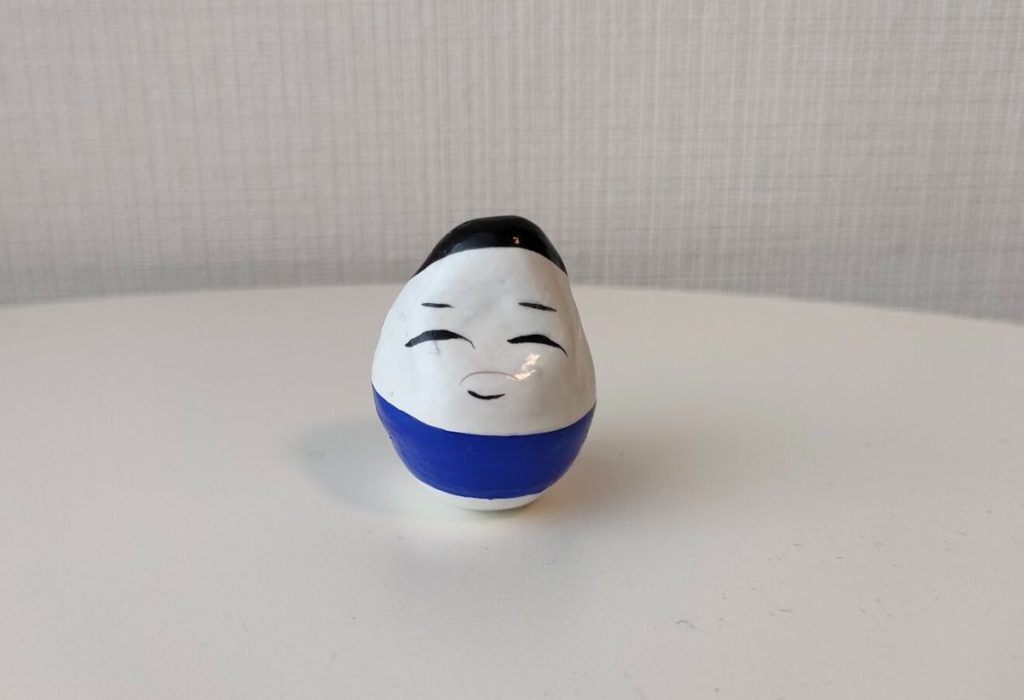
”Okiagari Koboshi” folk crafts(Mingei) of the Aizu region in Fukushima Prefecture.
Okiagari Koboshi are traditional folk crafts from the Aizu region (Aizuwakamatsu City, Fukushima Prefecture) that symbolize the spirit of “falling seven times, getting up eight.” They are considered good luck charms. About 400 years ago, during the time of feudal lord Gamo Ujisato, they were made by unemployed samurai and sold during the New Year’s season.
Okiagari Koboshi are cherished as symbols of resilience and health, as they immediately stand back up when knocked over. Their gentle expressions with narrowed eyes and round forms give a feeling of encouragement. There is a custom of buying one more than the number of family members, wishing for family prosperity and an increase in family members.
Additionally, during Aizu’s “Tokaichi” market held on January 10th each year, local people purchase Okiagari Koboshi to pray for a peaceful year. There are even thumb-sized ones that make perfect souvenirs to place on your desk. Let’s make sure to choose ones that actually stand back up after being knocked over!
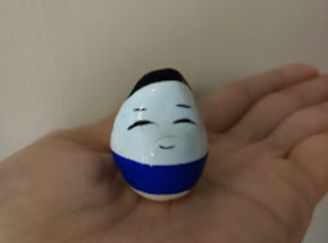
<出会った場所 Shop>
郡山駅構内売店 ※福島県内の民芸店、お土産店でも多く置かれています。
Souvenir shop in the Koriyama station.
起き上がり小法師(おきあがりこぼし)は、会津地方(福島県会津若松市)の伝統的な民芸品で、七転び八起きの精神を象徴する縁起物です。約400年前、蒲生氏郷が藩主だった時代に無役の藩士に作らせ、お正月に売り出したのが始まりとされています。
起き上がり小法師は、転んでもすぐに立ち上がるところから、粘り強さと健康を象徴するものとして親しまれています。目を細めた優しい表情と丸いフォルムがなんだか励まされている気分になります。家族の人数より1個多く買い、家族が増えて一家が繁盛することを願う習慣があるそうです。
また、毎年1月10日に開催される会津の「十日市」では、地元の人々が起き上がり小法師を購入して一年の平和を祈願するそうです。親指ほどの小さなサイズもあるのでおみやげにして、デスクに置いてみてはいかがでしょうか。実際に倒してみて起き上がるものをちゃんと選びましょう!

コメント