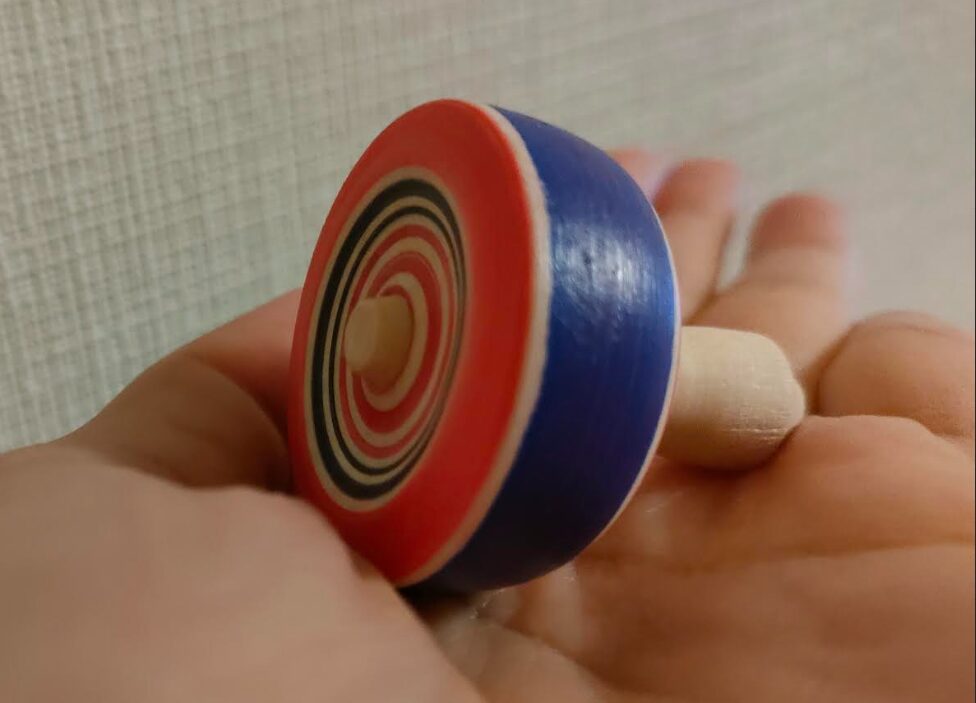
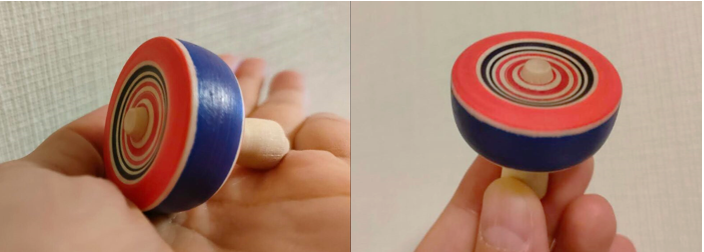
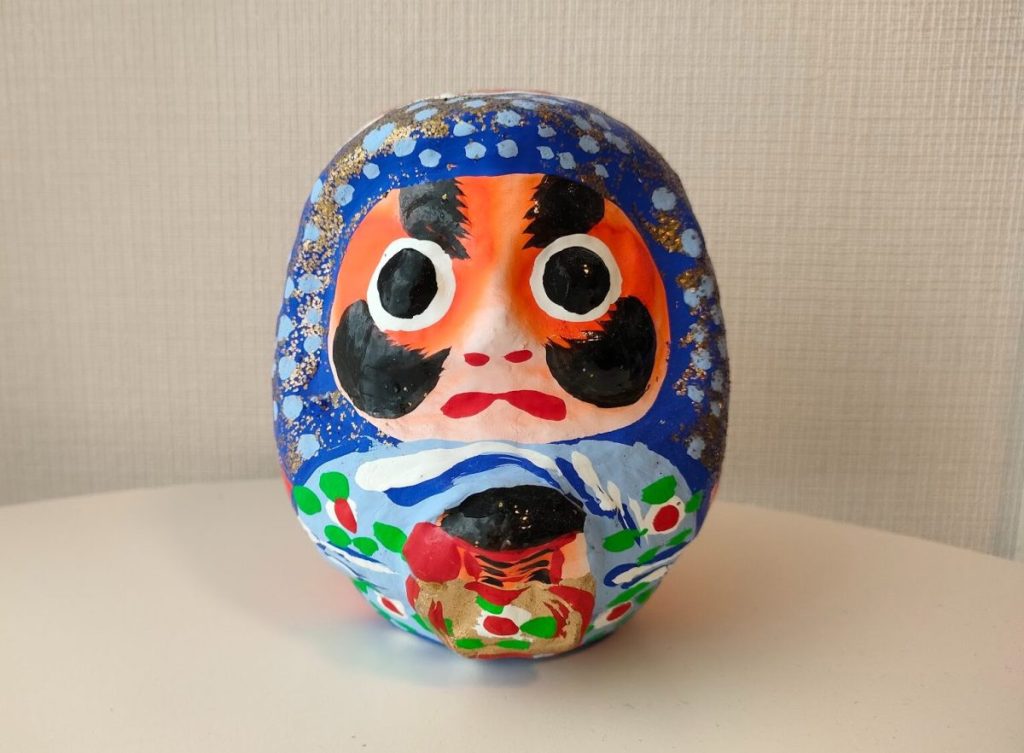
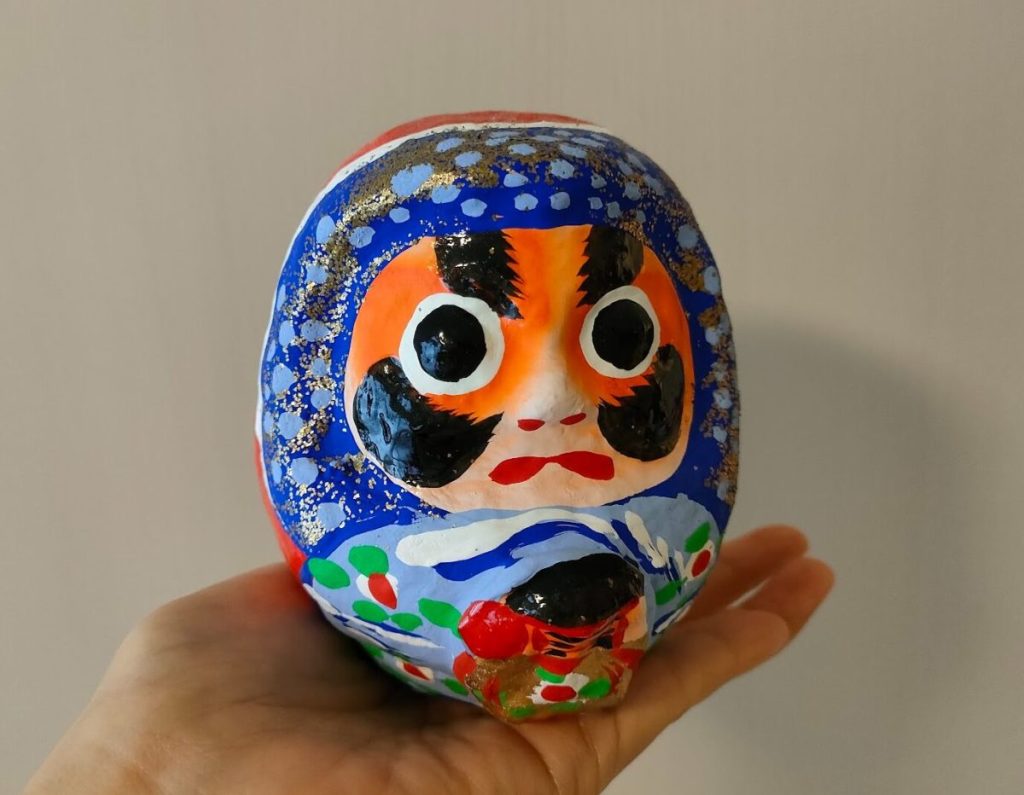
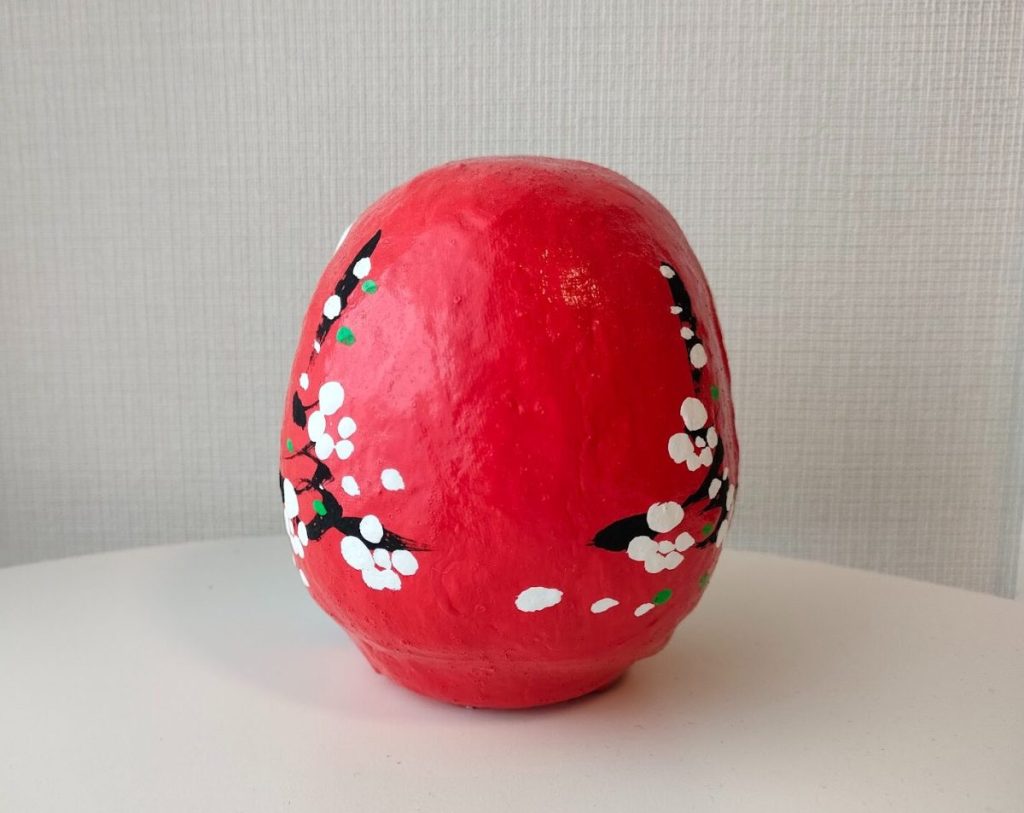
”Ōyama Koma(Spinning Top)” Folk crafts of the Isehara city in Kanagawa Prefecture.
■History of the Ōyama Spinning Top The origin dates back to the mid-Edo period, when it spread as a souvenir for worshippers visiting Ōyama Afuri Shrine. Craftsmen used local wood from Ōyama and created the tops through lathe work. Because they spin smoothly and for a long time, they came to be regarded as lucky charms for prosperity and family safety, gaining popularity among visitors. In the 1950s, they reached their peak as children’s toys, but with the decline in craftsmen, passing down the skills became a challenge. Today, the Ōyama spinning top is designated as an intangible folk cultural asset of the city.
■Features of the Ōyama Spinning Top The thick central shaft gives it stability, allowing it to spin for a long time. The basic colors are vermilion, purple, and indigo, which blend into beautiful patterns when the top is spinning. The material used is dogwood, giving the top a rounded, weighty form with a distinctive presence.
■Highlights of Ōyama
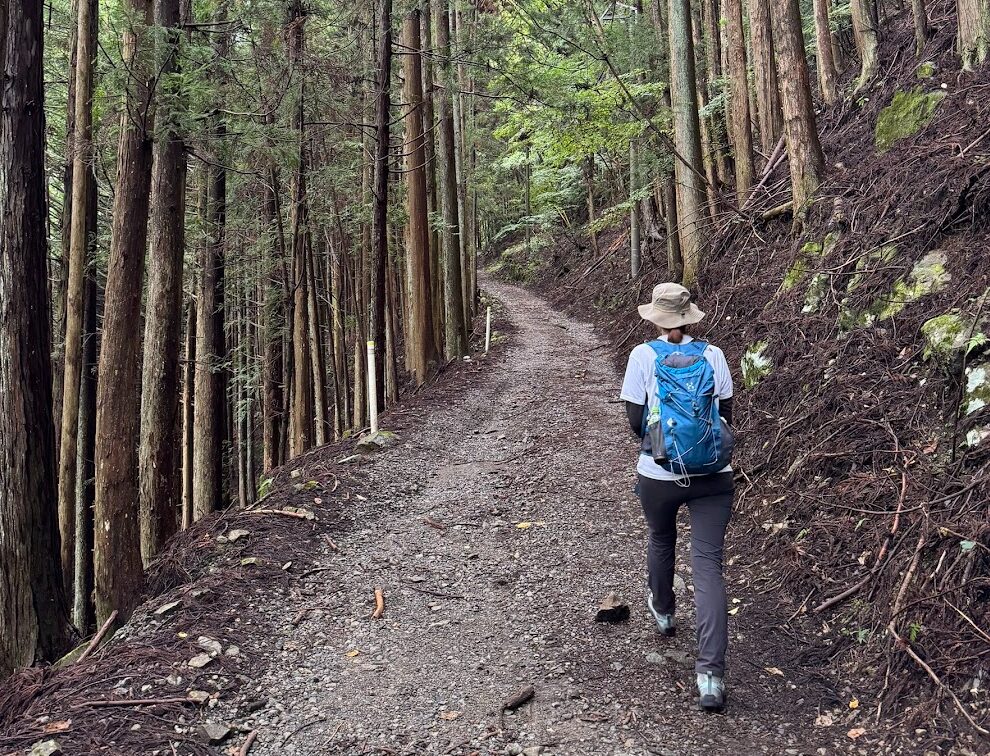
Ōyama Hiking Course: Starting from Afuri Shrine, a hike of about two hours leads to the summit. From the top, breathtaking views of Sagami Bay and Enoshima.
Ōyama Afuri Shrine: A historic center of mountain worship. Alongside worship, the culture of taking home an Ōyama spinning top as a souvenir has taken root. In late November, many visitors come to see the brilliant red autumn leaves surrounding the shrine.
Ōyama-dera Temple: Famous as a spot for autumn foliage, where the approach is vividly colored in the fall.
Koma Sando (Spinning Top Street): The approach leading to the cable car station is lined with shops and spinning top displays, making it enjoyable to stroll.
登山は自然の美しさを楽しむ素晴らしい体験ですが、同時に危険とも隣り合わせです。事故の多くは「もう少しなら行けるだろう」という油断から起きています。安全に下山するためには、引き返す勇気を持つことが何より大切です。ここでは、登山中に引き返しを判断すべきポイントとタイミングを整理します。 Hiking is a wonderful way to enjoy the beauty of nature, but it also comes with inherent risks. Many accidents occur from a moment of overconfidence—thinking “I can probably go just a little further.” To ensure a safe descent, the most important thing is having the courage to turn back. In this guide, we’ll outline the key points and timing for making that decision during your hike.
引き返しを検討すべきポイント
Points When You Should Consider Turning Back
天候の急変 雲が厚くなり視界が悪化、強風や雷の兆候が見えたら即座に下山を検討。
予定時間の遅れ 計画より大幅に遅れている場合、日没前に下山できない可能性が高まる。
体調の異変 強い疲労、頭痛、吐き気、めまいなどは高山病や低体温症のサイン。無理は禁物。
仲間の様子 グループ登山では一人でも不調者が出たら全員で引き返す判断が必要。
ルート状況の悪化 雪や岩が崩れやすい、道が不明瞭など危険が増している場合。
Sudden Weather Changes If the clouds become thicker and visibility worsens, or if signs of strong winds or lightning appear, consider descending immediately.
Delays in Schedule If you are significantly behind your planned schedule, the risk of not being able to descend before sunset increases.
Physical Condition Changes Severe fatigue, headaches, nausea, or dizziness can be signs of altitude sickness or hypothermia. Do not push yourself.
Condition of Group Members In group hiking, if even one member shows signs of poor condition, everyone should make the decision to turn back.
Deteriorating Route Conditions If snow or rocks become unstable, or the trail becomes unclear, the dangers increase.
引き返すべきタイミング
When You Should Turn Back
不安を感じた瞬間 少しでも「危ない」と思ったら、それは危険のサイン。直感を軽視しないこと。
ピーク目前でも 山頂まであと少しでも、天候が悪ければ潔く引き返す。体力に懸念があれば進まない。
下山時間を逆算して 予定より遅れている場合は、山頂を目指すより安全な下山を優先。
The Moment You Feel Uneasy If you feel even a little “this might be dangerous,” that is a warning sign. Never ignore your intuition.
Even When the Peak Is Close Even if the summit is just ahead, turn back without hesitation if the weather is worsening. If you’re unsure about your physical strength, do not continue.
Calculate Your Descent Time If you’re behind schedule, prioritize a safe descent rather than pushing for the summit.
引き返しや避難のタイミングを誤ると・・・
If You Misjudge the Timing to Turn Back or Seek Shelter…
Getting Lost After Sunset If your descent is delayed and you end up hiking in the dark, poor visibility greatly increases the risk of losing the trail or falling.
Being Caught in Severe Weather You may encounter thunderstorms, strong winds, dense fog, or snowfall, leaving you unable to move and at risk of hypothermia.
Exceeding Your Physical Limits Fatigue or altitude-related symptoms may worsen, leading to difficulty walking or even impaired consciousness.
Rescue Becomes Difficult At night or in bad weather, rescue teams and helicopters may be unable to operate, delaying discovery and rescue.
Putting the Entire Group in Danger In group hiking, one person pushing beyond their limit increases the risk for everyone.
自力では下山できなくなり、避難場所がなければ救助要請しか方法がなくなってしまいます。 If you lose the ability to descend on your own and there is no shelter nearby, requesting rescue may become your only option.
登山者に発生しやすい心理的な落とし穴
Common Psychological Pitfalls for Mountain Climbers
「せっかくここまで来たのだから」というピークハント欲
「もう少しなら大丈夫だろう」という楽観的判断
「仲間に迷惑をかけたくない」という遠慮
“I’ve come this far, so I want to reach the summit.” A strong desire to peak-hunt.
“It should be fine to go just a little farther.” Overly optimistic judgment.
“I don’t want to trouble my companions.” Hesitation caused by not wanting to be a burden.
これらが冷静な判断を鈍らせ、撤退のタイミングを逃す原因になります。 These factors can cloud your judgment and cause you to miss the right moment to retreat.
Mountaineering should prioritize returning safely over reaching the summit. Choosing to turn back is never a failure—it is a wise decision that leads to your next climb. This is true even when accompanied by a guide or participating in a tour. The mountain will always be there, and the opportunity to challenge it will come again. Being able to make the courageous decision to retreat is also one of the essential skills of a mountaineer.
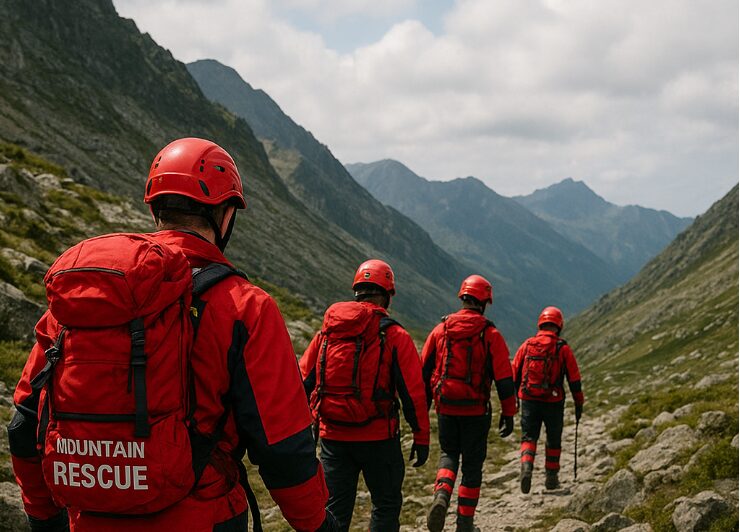
News about mountain accidents becomes more prominent in the summer. Recently, there has been an increase in accidents involving foreign visitors as well. I truly hope they can enjoy hiking in Japan with proper knowledge of mountain safety. In some cases, rescue requests are made in the evening. However, even rescue teams cannot operate at night or during severe weather conditions. Here, I would like to explain two types of rescue operations: ground rescue teams and helicopter rescue teams.
救助隊の活動時間帯
Rescue Team Activity Hours
地上救助隊Ground Rescue Teams ・原則として 日中(明るい時間帯) に活動。夜間は視界が悪く、隊員自身の安全確保が難しいため活動は制限される。 ・夜間救助が必要な場合は、現場でのビバーク(緊急野営)や翌朝まで待機するケースもある。 ・As a rule, they operate during the daytime (when visibility is good). At night, poor visibility makes it difficult to ensure the safety of the rescuers themselves, so activities are restricted. ・If rescue is required at night, the team may have to bivouac (set up an emergency camp) at the site or wait until the following morning.
ヘリコプター救助Helicopter Rescue ・日の出から日没まで が基本的な活動可能時間帯。夜間飛行は安全上の理由から行われない。 ・救助隊の救助も安全を確保できる状態での出動です。日没近くに救助要請した場合、翌日になる(=暗闇で一晩越さなければならない)ことを頭に入れておいてください。 ・The basic operational hours are from sunrise to sunset. Night flights are not conducted for safety reasons. ・Rescue teams can only be dispatched when conditions allow for safe operations. If you request rescue close to sunset, keep in mind that it may be postponed until the next day—meaning you will need to spend the night in darkness.
ヘリコプターを飛ばせる条件
Conditions for Helicopter Deployment
天候条件Weather Conditions ・雨・雪・濃霧などで視界が悪い場合は飛行不可。 ・強風や乱気流がある場合も危険のため出動できない。 ・Flights are not possible when visibility is poor due to rain, snow, or dense fog. ・Strong winds or turbulence also make deployment too dangerous.
地形条件Terrain Conditions ・山岳特有の急峻な地形や狭い谷ではホバリングや着陸が困難。 ・開けた尾根や広場など、救助隊が安全に接近できる場所が必要。 ・Steep mountain terrain or narrow valleys make hovering or landing difficult. ・Open ridges or flat areas are required so that rescue teams can safely approach.
時間条件Time Conditions ・基本は 日中のみ。夜間は飛行禁止。冬季など日照時間が短い時期は活動可能時間も短くなる。 ・Operations are generally limited to daytime only. Night flights are prohibited. In winter, shorter daylight hours mean reduced operational time.
安全判断Safety Judgment ・機長が気象・地形・機体性能を総合的に判断し、安全が確保できない場合は出動中止となる。 ・The pilot makes a comprehensive decision based on weather, terrain, and aircraft performance. If safety cannot be ensured, deployment will be canceled.
In the event of an accident, do not hesitate to call 119 or 110.
Always make sure to submit a climbing registration form before your trip.
When making the emergency call, briefly convey your location, situation, number of people, physical condition and color of the clothing”. Providing GPS information will speed up discovery.
When a helicopter approaches, signal with a brightly colored cloth or a light to make yourself easier to spot.
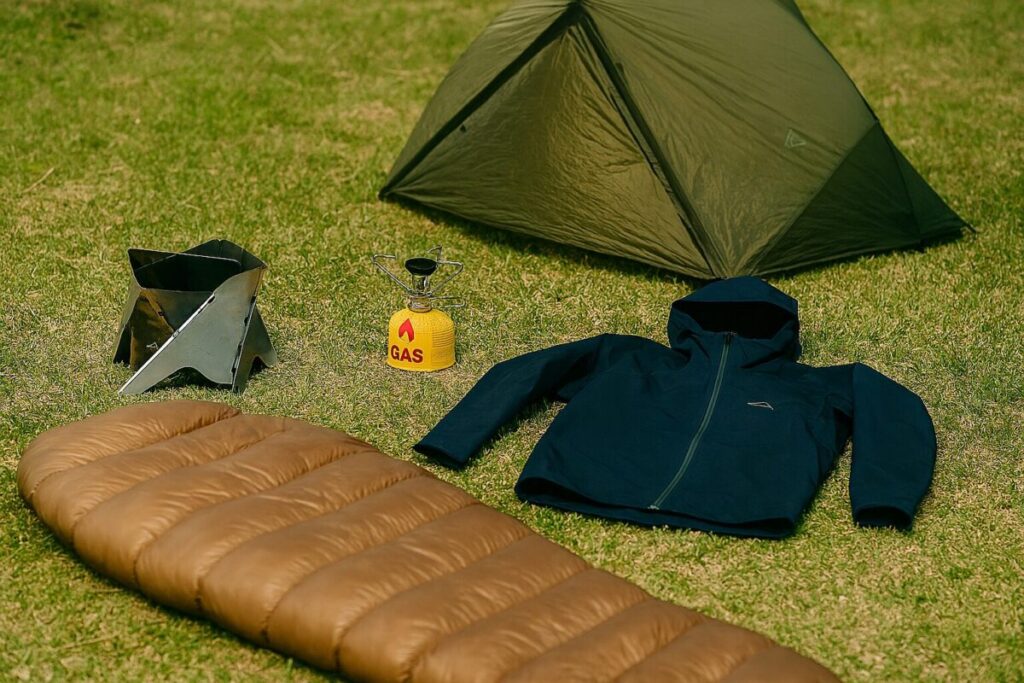
Since rescue may be delayed at night or in bad weather, it is essential to always carry bivouac equipment such as warm clothing, food, and a light.
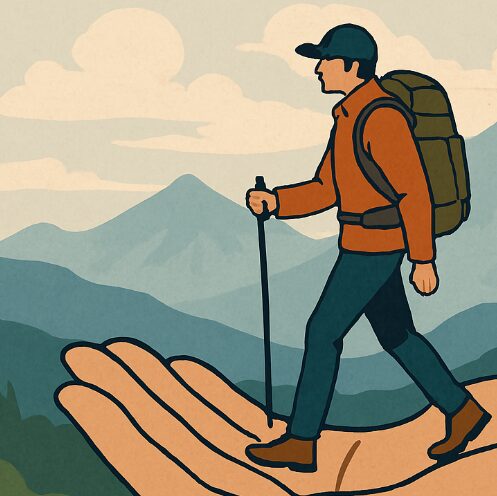
To stay safe in the mountains, it’s a great idea to stop by a local visitor center or tourist information office before your hike. Staff can give you up-to-date information about trail conditions, the difficulty level, and what gear you’ll need. Especially if you’re new to hiking in Japan, getting local advice can help you avoid unexpected challenges and enjoy your adventure with peace of mind. Don’t hesitate to ask questions—your safety comes first!
Rescue teams and helicopters can only operate during the daytime, in good weather, and in safe terrain. They are not like superheroes who can come to your aid anytime, anywhere. Nor do they have complete knowledge of every corner of the vast mountains.
This means that climbers themselves must be prepared in case of an emergency or accident. Whether your life can be saved or not ultimately depends on your own preparation and knowledge. It is important to keep this in mind and reaffirm it before heading into the mountains.
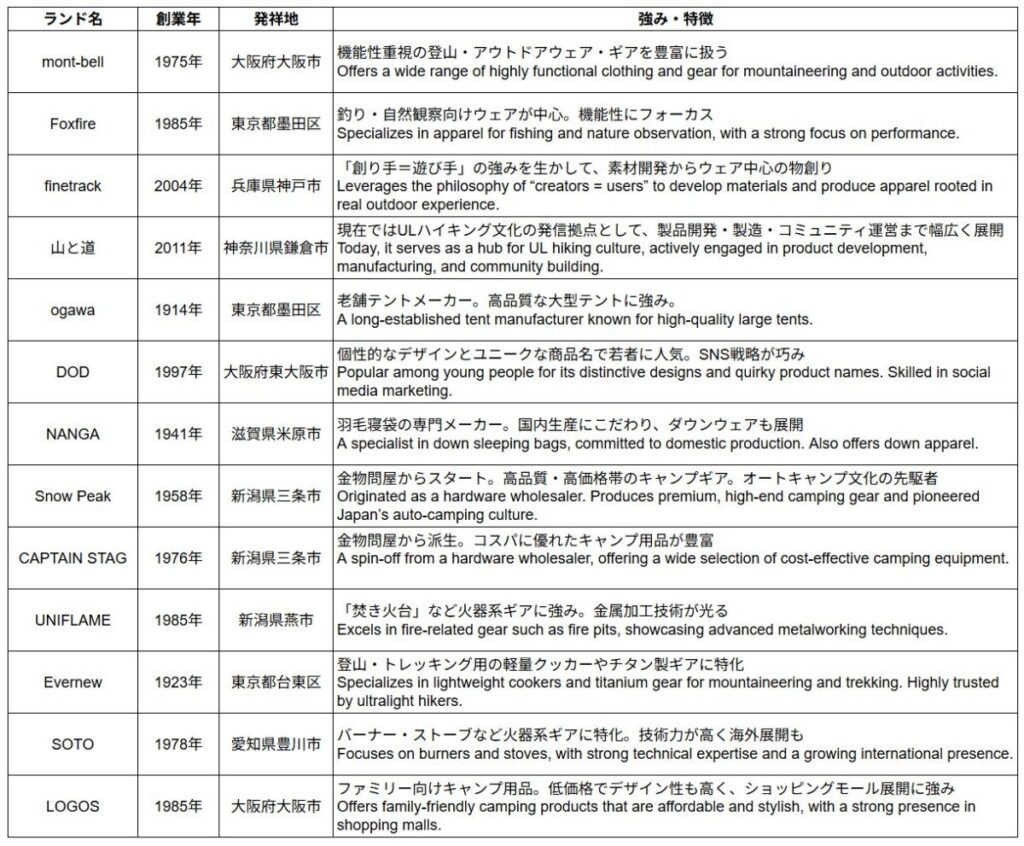
Outdoor gear is something we carefully select at specialty stores, paying close attention to functionality and materials. But by learning the story behind each brand, we gain a deeper understanding of its strengths and unique philosophy. In this article, I’d like to focus exclusively on Japanese brands and introduce what makes each one stand out.
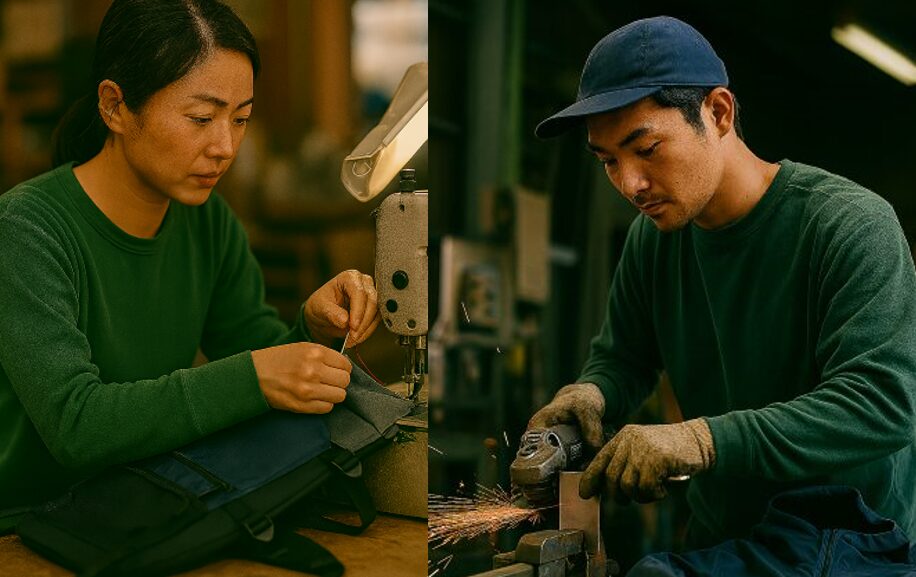
There are two main origins for outdoor brands in Japan. One begins with passionate hikers and outdoor enthusiasts who created gear and apparel to suit their own needs—products that gained recognition and eventually evolved into full-fledged brands. The other stems from companies with a background in industrial manufacturing, who applied their technical expertise to develop gear for outdoor use. In both cases, a strong focus on safety, comfort, and reliable craftsmanship is reflected in the products.
One of the key strengths of Japanese outdoor apparel is their wide range of products tailored to Japan’s distinct four seasons—from humid summers to snowy winters. Another notable feature is their sizing, which is specifically designed to suit Japanese body types, differing from the standard Western fit. This attention to detail ensures better comfort and functionality for domestic users. As for gear, not only tough and durable—it’s also designed to be lightweight and highly efficient when it comes to packing and storage. This thoughtful balance of strength and portability reflects the needs of hikers who value both reliability and minimalism.
While the high quality is naturally reflected in the price, Japanese outdoor brands tend to set their pricing with the domestic market and cost of living in mind. Compared to overseas products with similar functionality and quality, you may find the prices slightly more affordable.
Understanding the spirit, story, and craftsmanship behind a brand—not just its products—can deepen our appreciation and foster a genuine connection. Outdoor gear, in particular, can directly impact performance and, in critical moments, even become a life-saving tool. That’s why each item deserves thoughtful consideration before purchase. I hope this blog inspires a renewed discovery of Japanese outdoor brands and the values they carry.
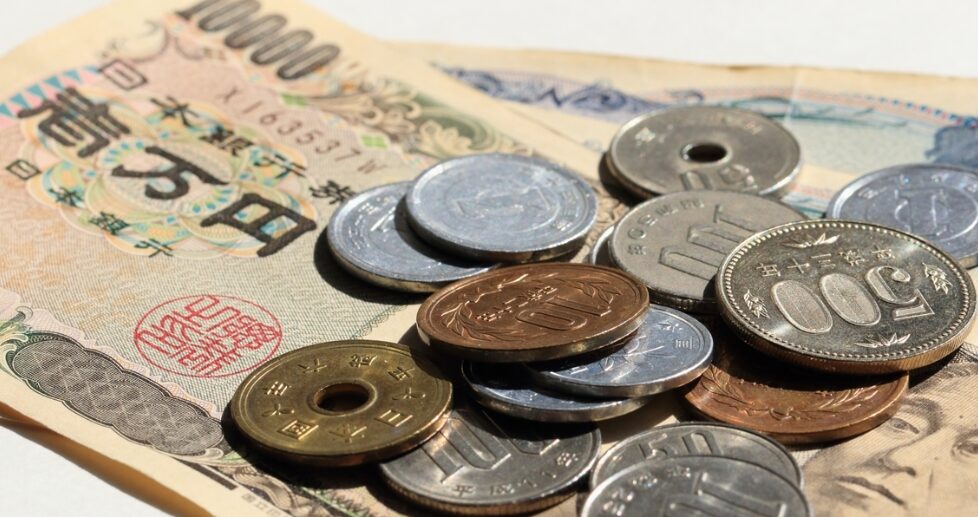
Six Moments When Cash Is Essential on a Mountain Trip
山旅をするときは、ICカード、レジットカード、スマホ決済だけでは乗り切れない場面が意外と多いです。今回は、実際に現金が役立つ6つのシーンをご紹介します。現地で冷や汗をかくことがなくないよう、参考になさってください。 When embarking on a mountain trip in Japan, you may be surprised to find that IC cards, credit cards, and mobile payments aren’t always enough. In this post, we’ll highlight six real-life situations where cash proves to be incredibly useful.
ローカルバスや登山口までの交通機関での支払い
Local buses and transportation to trailheads
山間部では、ICカードやクレジットカードが使えないバスが多く、現金(特に小銭)での支払いが必須です。登山口までのアクセスでいきなり困らないように用意しましょう。 In mountainous regions, many buses do not accept IC cards or credit cards, making cash—especially coins—essential for payment.
商店や山小屋での買い物
Purchasing goods at small shops and mountain lodges
登山口にある商店や山小屋での買い物は、現金オンリーの店が多くあります。現金がないことでせっかくのチャンスを逃さないように、現金を用意しましょう。 Many shops and mountain huts near trailheads operate on a cash-only basis.
山小屋や民宿での宿泊費支払い
Paying for accommodation at mountain huts and guesthouses
多くの山小屋では現金払いのみ対応。食事代や寝具の追加料金も現地で現金精算が必要になることがあります。 Many mountain huts only accept cash. Additional fees for meals or bedding often need to be paid in cash on-site.
トイレチップの支払い
Paying a toilet tip
トイレを整備してくださっているのは大変ありがたいですね。利用するときはチップを払いましょう。多くが100円ですので、あらかじめ100円玉は複数枚持っておくことをおすすめします。 It’s truly appreciated that these toilets are well maintained for hikers. When using them, be sure to leave a small tip. Most facilities request a contribution of ¥100, so it’s a good idea to carry several ¥100 coins in advance.
自動販売機での購入
Purchasing from vending machines
登山口、ビジターセンターに自動販売機をおいてくれていますが、現金のみのものが多いです。 Vending machines are often placed near trailheads and visitor centers, but many of them accept cash only.
神社仏閣でのお賽銭やお守り購入
Offering coins at shrines and temples, and purchasing amulets
日本文化を体験するなら、神社やお寺は外せません。お賽銭やお守りの購入は、ほぼ現金オンリ ー。ご利益を願うなら、ポケットに小銭を忍ばせておきましょう。 If you want to experience Japanese culture, visiting shrines and temples is a must. Offering coins and purchasing amulets are almost always cash-only.
まとめ
Summary
キャッシュレスが進む昨今でも、現金が必要な場面は意外と多いもの。特に地方や伝統的な施設を訪れる場合は、現金を準備しておきましょう! Even in Japan’s increasingly cashless society, there are still many situations where cash is necessary. Especially when visiting rural areas or traditional facilities, it’s wise to carry cash with you.
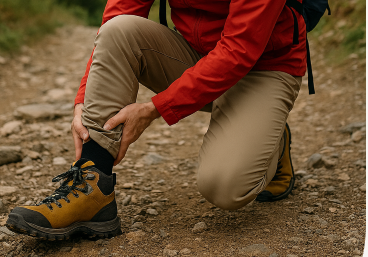
Have you ever experienced a sudden leg cramp during exercise? If it happens while hiking, the sharp pain can be alarming and even dangerous. In this article, I’ll explain the common causes of leg cramps, how to deal with them when they strike, and practical tips to prevent them—so you can enjoy your hike with confidence.
なぜ登山中に足がつるのか? Why do leg cramps happen during hiking?
山での足のつりは、いくつかの要因が重なって起こります。
筋肉の疲労Muscle fatigue 長時間の歩行や急登で筋肉が酷使され、異常収縮を起こします。
水分・電解質の不足Loss of fluids and electrolytes 汗で失われたナトリウムやカリウム、マグネシウムが不足すると、神経伝達が乱れて筋肉が誤作動します。
冷えによる血行不良Poor circulation due to cold 特に冬季や標高の高い場所では、筋肉が硬直しやすくなります。
ウォーミングアップ不足Lack of warm-up 登山前の準備運動が不十分だと、筋肉が急な負荷に対応できず、つりやすくなります。
足がつったときの対処法 What to do when you get a leg cramp
もし登山中に足がつってしまったら、慌てず以下の方法で対応しましょう。
ストレッチで筋肉を伸ばすStretch the affected muscle gently つった部位をゆっくり伸ばします。ふくらはぎなら、座ってつま先を手前に引くようにすると効果的です。
優しくマッサージ Massage the area softly to relieve tension 痛みが落ち着いてきたら、筋肉をもみほぐして血流を促します。
水分と電解質の補給Replenish fluids and electrolytes スポーツドリンクや経口補水液で、失われたミネラルを補いましょう。
足がつらないための予防法 Preventing Leg Cramps During Hiking
登山前・登山中にできる予防策を紹介します。
登山前のウォーミングアップ Worm up before hiking 軽いストレッチで筋肉を目覚めさせましょう。
ミネラルを含む行動食の準備Pack snacks rich in minerals バナナ、梅干し、ナッツなどがおすすめです。
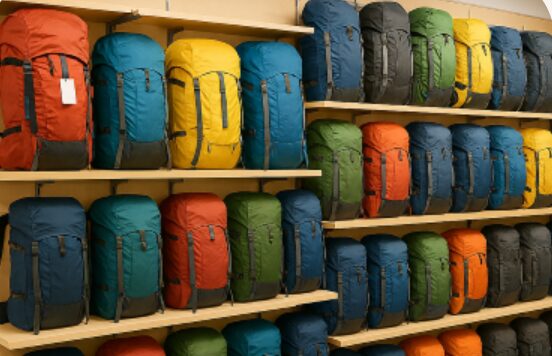
There’s something exciting about getting a new backpack. It sparks anticipation for future adventures. But before you hit the trail, it’s important to prepare and understand its features to ensure a safe and comfortable journey. Let’s go through a few key steps.
Inspect the product tags and any included accessories. Learn about the materials and capacity. Some models come with handy extras like rain covers—don’t miss them!
防水・撥水加工の確認 Confirm Waterproofing and Water Resistance
Outdoor trips often involve unexpected rain. Most of backpack is not completely waterproof. Reinforcing with a waterproof spray is a smart move. Keep in mind that these features can wear down over time, so regular care is essential.
Comfort is everything! Pack it with your expected gear and ware, then adjust the shoulder straps, chest belt, and waist belt to suit your body. Take a short walk to test how it feels. Pay attention to how the weight shifts and whether your shoulders or hips feel strained. Fine-tune the fit until it feels just right. A mirror can help you check balance and posture.
Decide in advance what goes where. Items you use frequently should go in outer pockets, while valuables belong inside. Visualize how you’ll use each compartment and check their storage capacity.
ストラップ・パーツの使い方を把握する Understand Straps and Parts Usage
Ever wondered, “What’s this strap for?” or “Why is this part here?” You’re not alone! Try extending or adjusting everything to see its full range. You might discover new uses. Everything is packed compactly at purchase, so take time to explore. Carrying a few thin ropes or carabiners can boost your backpack’s versatility.
My 35L backpack has been a trusty companion for over 10 years, from day hikes to long overseas trips. External parts and adjusters help expand its capacity, so there’s no need to buy a larger one.
That little bit of effort right after purchase can lead to greater comfort, safety, and potential in how you use your backpack. It’s your travel buddy, always by your side—so get to know its features and enjoy your journey to the fullest!
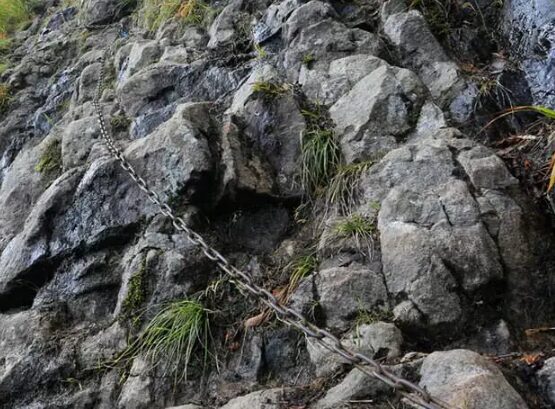
Among mountain trails, “chain sections” installed on rocky areas and steep slopes are tense places. Beginners may feel uneasy, but with the right knowledge and actions, it is possible to pass through safely. Let’s take a look at the following precautions.
The presence or absence of chain sections greatly affects the difficulty of a climbing route. Check in advance using maps, climbing apps, and climbing records, and choose a route that matches your skill level.
前後の登山者との距離と声かけ Distance from other climbers and communication
Chain sections are prone to congestion and pose risks of falling, rockfalls, and missteps. Keep a sufficient distance from the person in front of you, wait until they have passed before moving, and communicate with each other to show consideration. It is especially important to note that even if you maintain a distance, do not hold onto the same chain with another person. If one person loses their balance and swings the chain, the other person holding onto it may also lose their balance and fall. It is necessary to confirm how far the chain extends before holding onto it.
鎖は“補助” 三点支持を意識 Chains are just “auxiliary”—focus on three-point support
Moving while supporting your body with three points—“both hands plus one foot” or “both feet plus one hand”—increases stability. Maintain balance even without the chain, proceed calmly and steadily one step at a time. Relying too heavily on the chain is dangerous, as your body could be pulled along if the chain sways unexpectedly. Use the chain solely as an “auxiliary tool” and climb while carefully checking the footing on the rock face.
Wear climbing gloves with slip-resistant grips to protect your hands when gripping the chain. Since one hand is on the chain and the other on the rock face, using bare hands increases the risk of injury or slipping.
Chains and rocks become extremely slippery when wet. On days with poor weather, it is important to make the decision to turn back without pushing yourself. It is also important to prepare in advance by checking the course beforehand and reading reviews on climbing blogs to plan strategies for avoiding hazards.
Complacency is strictly forbidden on chain sections. Prepare thoroughly and enjoy safely. Recently, I visited Akadake (2,899m) in the Yatsugatake Mountains, but even if you know the precautions, once you’re on-site, the fear and instability of the footing can make it hard to move forward. Practice on low-altitude chain sections first and get accustomed before tackling high-altitude ones.
Mountain climbing is a wonderful activity that allows you to refresh your mind and body in nature, but it also carries the risk of unexpected accidents and injuries. We often see news reports of mountain climbing accidents. It is very important to have mountain climbing insurance in case of such an accident. Recently, it has become common to have mountain climbing insurance, and there are many different types of insurance available. It is necessary to choose insurance that suits your activity range and skills.
Mountain rescue operations can be very expensive. If you have mountain climbing insurance, the cost of helicopter rescue and search operations will be covered. Plans and coverage vary depending on the type of activity, such as mountain climbing, trail running, rock climbing, or snow activities, so it is important to check carefully when applying online.
ケガや事故による治療費を補償
Compensation for medical expenses incurred due to injury or accident
Medical expenses are covered for injuries sustained while climbing, such as fractures caused by slipping or falling. Most people only consider their own injuries, but it is also important to consider the possibility of injuring other climbers nearby due to your own fall or slip. The author was more concerned about this risk and decided to take out insurance.
家族や仲間への負担を軽減
Reducing financial and mental burdens on family and friends
Taking out insurance can raise awareness of risk management and safety measures. I have become more cautious about injuries and accidents, researching what risks there are in advance and checking whether my abilities are adequate and my equipment is sufficient.
人気の山岳・登山保険
Mountain and climbing insurance with many subscribers
Mountain climbing insurance is a precautionary measure that will make you glad you had it in case of an emergency. It costs around 3,000 to 8,000 yen per year, so whether you are a beginner or an experienced climber, be sure to prepare yourself properly and enjoy safe mountain climbing. If you are unsure about which plan is right for you, it is a good idea to consult with a salesperson at a mountain climbing equipment store.
In summer, you want to spend time outdoors feeling the sun and wind. Salt is a recommended item for such occasions. I carry salt in a small zipper bag, and it came in handy the other day as a measure against ticks. Please refer to the other uses.
塩の使い方 Uses of Salt in Outdoor Activities
●熱中症対策にPreventing Heatstroke 汗をたくさんかく屋外では、水分だけでなく塩分も失われます。スポーツドリンクの代わりに、塩を少しなめてから水を飲むと、体の塩分バランスが整いやすくなります。 When you’re sweating heavily outdoors, you’re losing not only water but also salt. Instead of relying solely on sports drinks, try licking a small amount of salt before drinking water. This helps maintain your body’s salt balance more effectively.
●料理の味付けにSeasoning Food キャンプやバーベキューの時、塩があるだけで食材のうま味が引き立ちます。シンプルな焼き野菜や魚も、道の駅で買った新鮮な野菜も、塩ひとつでごちそうに変身! During camping or barbecues, just a pinch of salt can enhance the natural flavor of ingredients. Simple grilled vegetables, fish, or fresh produce from roadside stations can be transformed into gourmet dishes with just salt.
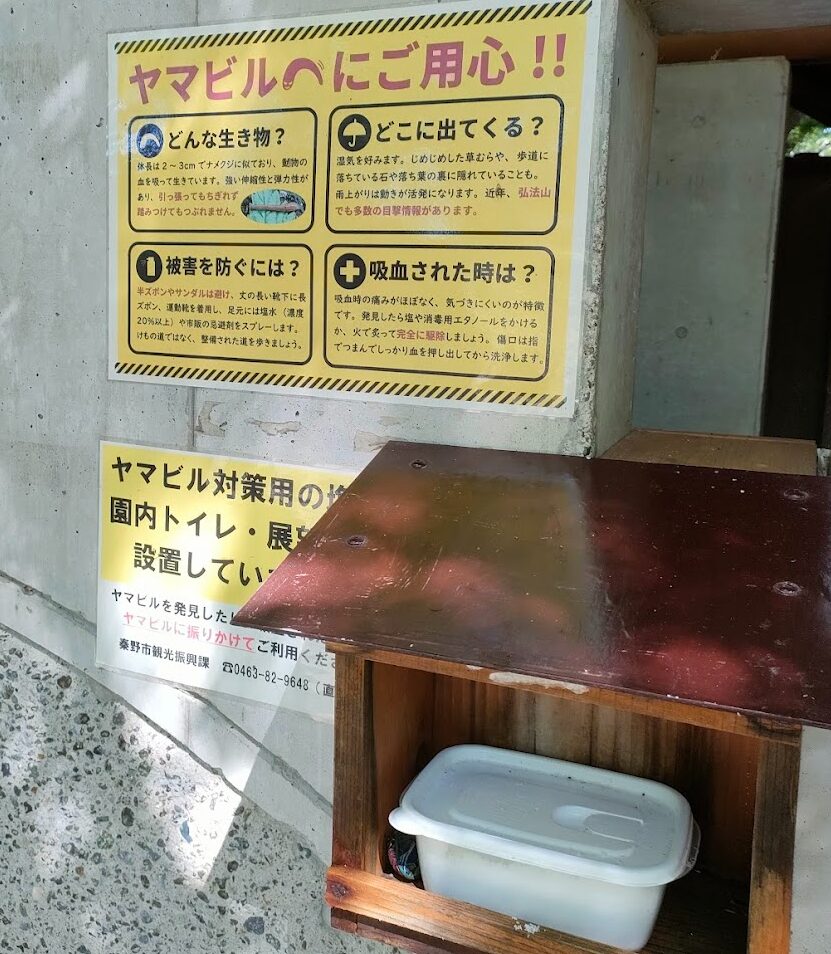
●虫除けにRepelling Leeches ヒルは塩を撒くことで、侵入を防ぐ効果が期待できることもあります。 Salt can be an effective deterrent against leeches in certain environments.
ヤマビル(山蛭)Mountain Leeches (Yamabiru)
湿った山林に多く、人や動物の血を吸います(タイツや靴下の上からでも)
塩をかけると強い脱水作用で撃退可能。瞬時に縮んで落ちることもあります(ナメクジと同じ)
食塩水でも効果あり。ただし濃度が高い方が効きます
Found in damp forests, these leeches feed on the blood of humans and animals—even through tights or socks. Sprinkling salt causes rapid dehydration, often making them shrivel and fall off instantly (similar to slugs). Saltwater also works, though higher concentrations are more effective.
チスイビル(水棲ヒル)Aquatic Leeches (Chisuibiru)
水辺に多く、足元から侵入して吸血します
塩をかけると離れる性質があり、林業従事者も対処法として活用しています
Common near water, they attach to your feet and suck blood. Salt causes them to detach, and forestry workers often use this method as a countermeasure.
●汚れ落としにCleaning Aid 塩には軽い研磨作用があるので、こびりついた食器や網の掃除に便利です。自然に優しい洗浄方法として使えます。
Salt has mild abrasive properties, making it useful for scrubbing stubborn grime off dishes or grills. It’s an eco-friendly cleaning option that’s gentle on nature.
●保冷剤の代用としてAlternative to Ice Packs 氷と塩を一緒に使うことで、温度を急激に下げることができます。食材を冷やしたいときなど、簡易的な冷却手段として活躍します。
By combining ice and salt, you can rapidly lower the temperature. This method is especially useful as a simple cooling solution when you need to chill food or drinks outdoors. Salt accelerates the melting of ice, which in turn absorbs heat from its surroundings—creating a quick and effective cooling effect.
注意
・金属にかかってしまうと、錆の原因になります。 ・塩分が原因で近くの植物が枯れてしまう可能性もあるので、周囲の植物に注意が必要です。 ・虫の対応に備えて出しやすいところに入れておきましょう。 It may also harm nearby plants, so be mindful of your surroundings when using salt. For insect protection, keep salt in an easily accessible spot so you can use it quickly when needed.
まとめ
外でのスポーツやレジャーでも必ず持っていってほしい「塩」。次のお出かけアイテムにひとつ加えてみてください。アウトドアの達人っぽさがひと味アップするかも! Whether you’re enjoying sports or leisure outdoors, salt is a must-have item. Add it to your next adventure kit—you might just level up your outdoor skills and look like a seasoned pro!
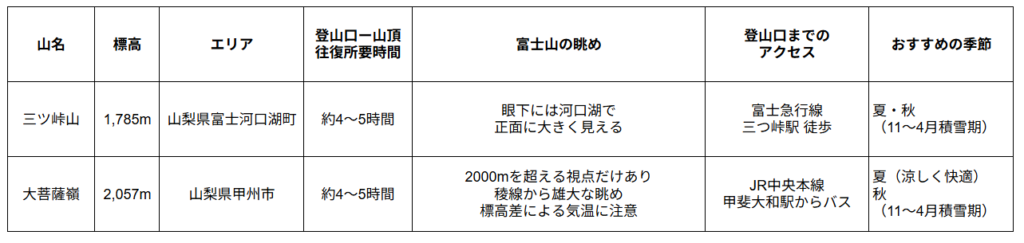
“Mountains with Beautiful Views of Mt. Fuji – 7 Easy-to-Reach Spots from Shinjuku”
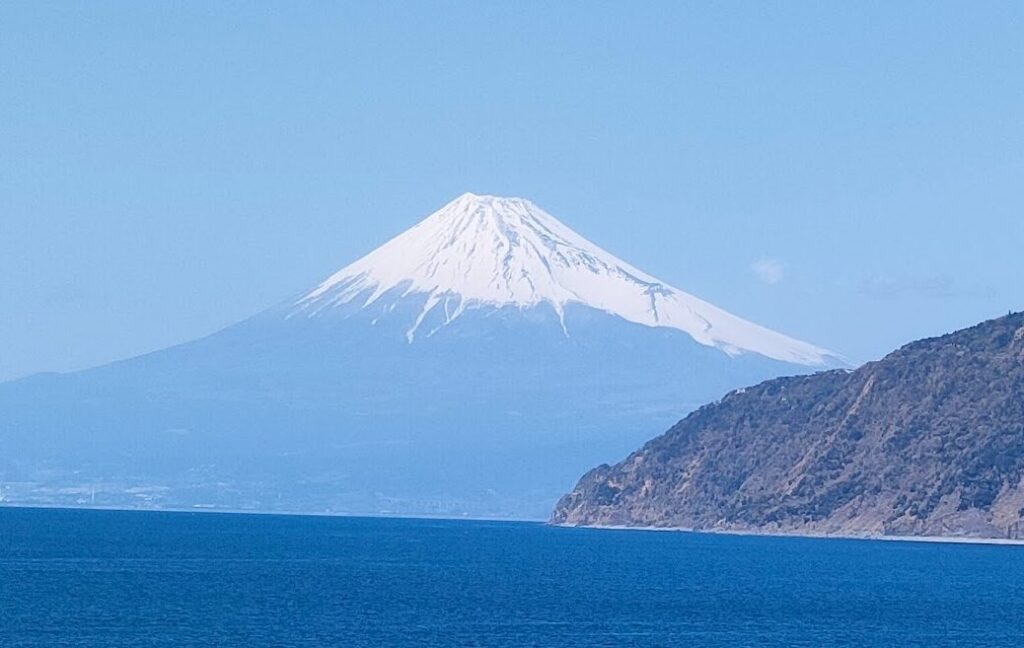
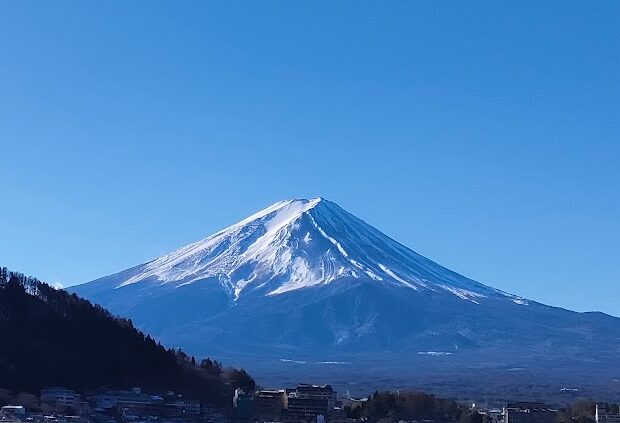
Whenever I mention that my hobby is hiking, I always get asked, “Have you ever climbed Mount Fuji?” Although I have climbed it, once you’re at the top, you can no longer see Mount Fuji, which left me somewhat unsatisfied. Since then, I’ve focused on finding mountains to climb during autumn and winter where I can enjoy beautiful views of snow-covered Mount Fuji. I’d like to recommend some mountains where you can see Mount Fuji, categorized by hiking skill level
富士山がきれいに見える季節 The season when Mt. Fuji can be seen beautifully
富士山をきれいにみたいなら、11月~4月の寒い季節が最適です。 If you want a clear view of Mount Fuji, the cold season from November to April is ideal.
標高によっては雪が降る季節なので、積雪情報をチェックしておく必要があります。 Since this is also the season when snow may fall depending on elevation, it’s important to check weather forecast and snowfall conditions in advance.
寒い季節なので、服装のレイヤリングや、山頂の気温が低い場合に備えての予備の服が必要です。 Due to the cold temperatures, layered clothing is recommended, along with extra warm gear
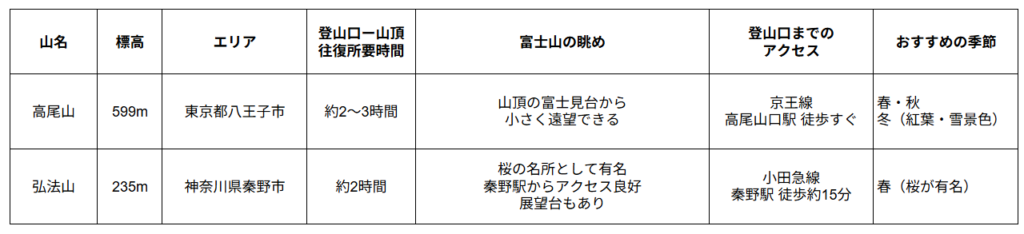
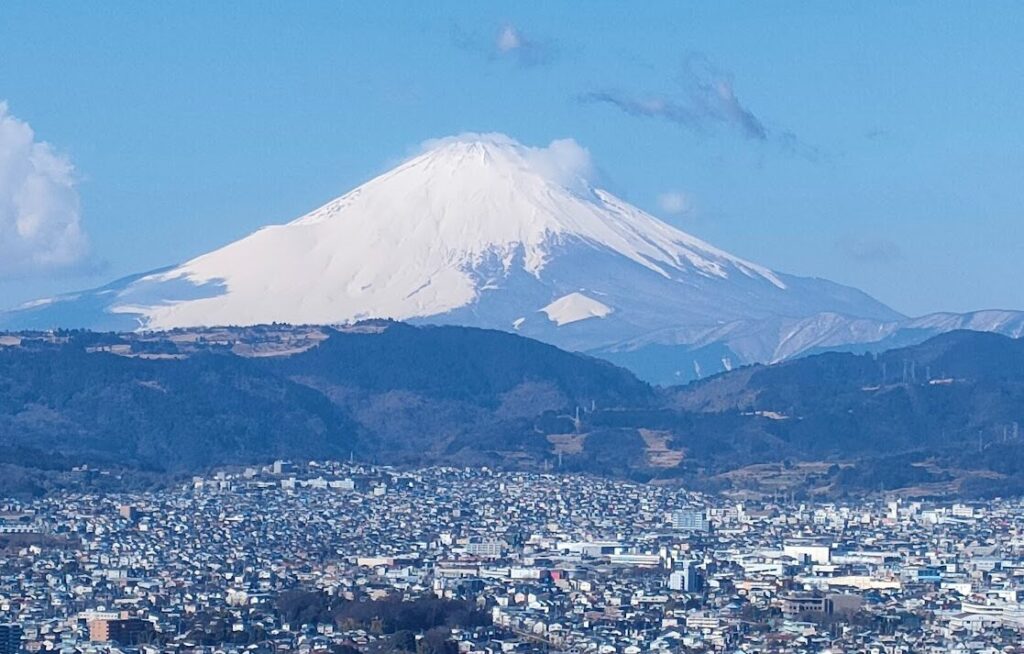
高尾山は有名ですが、筆者は弘法山をおすすめします。人も少なく、富士山を見ながらランチができる広い広場があります。 I recommend Mt.Kobo as an excellent hiking destination. It’s less crowded and features a spacious area where you can enjoy lunch while admiring the stunning view of Mount Fuji.
・登山道が整備されており、表示も多い。トイレもあります。 The hiking trail is well-maintained and clearly marked with many signs. Toilets are available along the route.
・標高も低く、登り&下りで2~3時間程度。 The elevation is low, and the round-trip hike (up and down) takes about 2 to 3 hours.
・標高が低いのですが、1~3月に積雪することもあります。 Although the elevation is low, snowfall can occur between January and March.
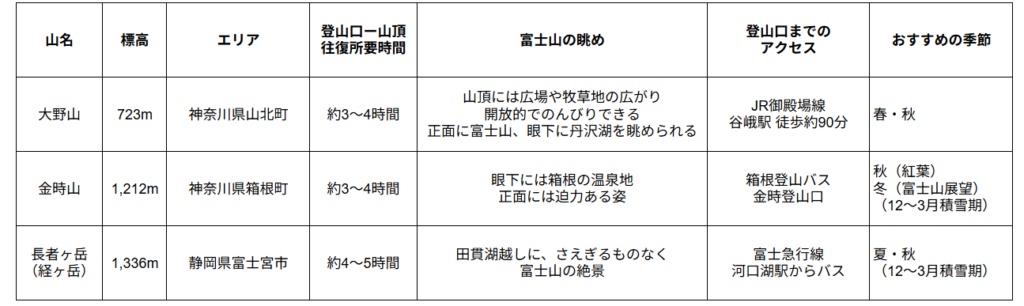
・4~5時間、登山靴で歩き続けられる体力が必要。 You need enough stamina to walk continuously for 4 to 5 hours in hiking boots.
・15時には下山完了しないと闇になってしまうため、遅くても10時までには登山を開始する必要あり。 To avoid descending in darkness, the hike must begin no later than 10:00 AM, as you should finish by 3:00 PM.
・道のりが長い分、道に迷うリスクが高いため、登山専用地図(紙&デジタル)の用意は必要。 Because the trail is long and the risk of getting lost is higher, a dedicated hiking map (both paper and digital) is required.
・バスを利用する場合、バスの時間を含めて登山計画を行い、事前の登山計画書の提出も必要です。 If using a bus, include bus schedules in your hiking plan and submit a hiking itinerary in advance.
・12~3月は積雪がありますので、計画時に状況を確認する必要があります。 From December to March, there is snowfall, so be sure to check conditions when planning your hike.
・5~6時間、登山靴で歩き続けられる体力が必要。 You need enough stamina to walk continuously for 5 to 6 hours in hiking boots.
・遅くても9時までには登山を開始する必要あり。 The hike must begin no later than 9:00 AM.
・登山専用地図(紙&デジタル)の用意は必要。 A dedicated hiking map (both paper and digital) is required.
・標高がかなり上がるので、予備の上着は1‐2枚持参すること。 Since the elevation increases significantly, bring 1–2 extra layers of clothing.
・1人2Lの水分は持参する必要あり。 Each person must carry at least 2 liters of water.
・バスを利用する場合は、バスの時間を含めて登山計画を行い、事前の登山計画書の提出が必要。 If using a bus, include bus schedules in your hiking plan and submit a hiking itinerary in advance.
・11~4月は積雪がありますので、計画時に状況を確認する必要があり。 From November to April, there is snowfall, so check conditions when planning your hike.
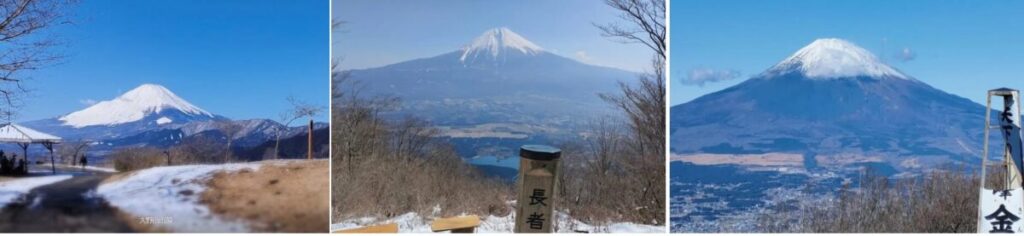
Mt.Mitsutoge 三ツ峠山 下山中のビュー (冬季:Winter)
まとめ
The majestic sight of Mount Fuji has a calming effect on everyone who sees it. For many international travelers, witnessing Mount Fuji is a key reason for visiting Japan. However, climbing Mount Fuji is extremely dangerous. It is a mountain for those who have trained and prepared thoroughly. Sadly, many people lose their lives on the mountain every year. To enjoy Mount Fuji safely, we encourage you to explore the surrounding lower mountains and viewpoints. These offer stunning views without the same risks. Whether Japanese or foreign, we sometimes see people attempting the climb without proper gear, clothing, or a clear plan.
Please understand:
Mount Fuji is a place where no one may be able to help you. You are entering a zone of personal responsibility.
Before climbing, make sure you are fully prepared—with the right equipment, knowledge, and respect for the mountain. Safety should never be an afterthought.
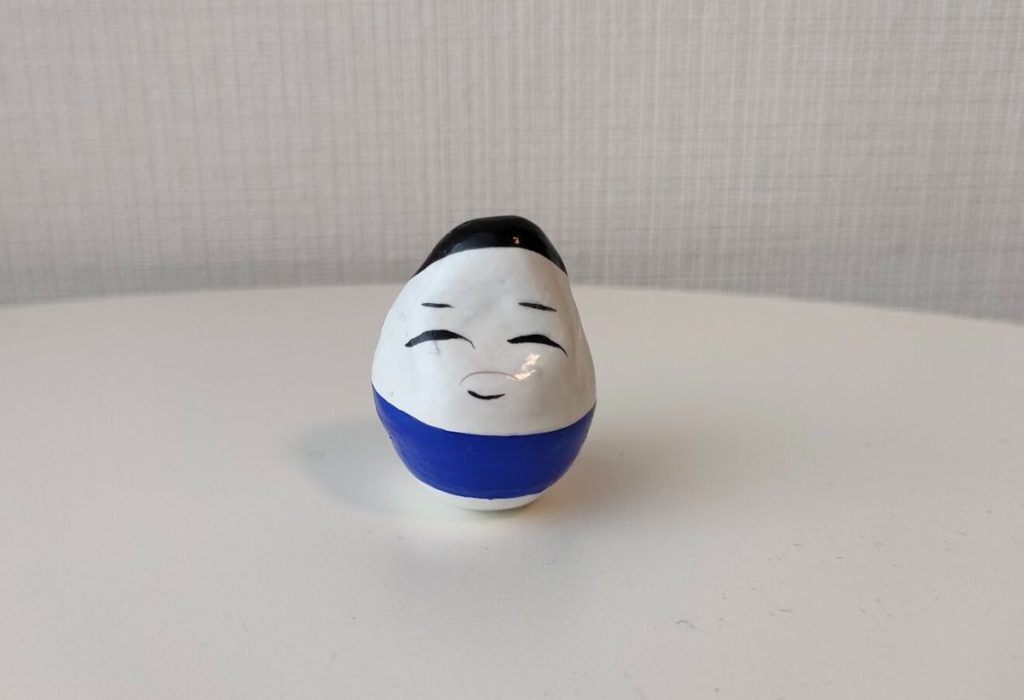
”Matsukawa Daruma” Folk crafts of the Sendai city in Miyagi Prefecture.
Matsukawa Daruma is characterized by its distinctive blue color. This blue color, known as “gunjouiro” (ultramarine), is considered a noble color favored by samurai. It is said that Matsukawa Daruma was popularized by Matsukawa Toyonosuke, a samurai of the Date clan, as a side job for the common people during the Tenpō famine.
Matsukawa Daruma has pupils painted in both eyes in advance, symbolizing a god watching over all directions and being considerate of Date Masamune’s one-eyed appearance. Additionally, they are elaborately decorated and cherished as lucky charms that bestow blessings.
”Okiagari Koboshi” folk crafts(Mingei) of the Aizu region in Fukushima Prefecture.
Okiagari Koboshi are traditional folk crafts from the Aizu region (Aizuwakamatsu City, Fukushima Prefecture) that symbolize the spirit of “falling seven times, getting up eight.” They are considered good luck charms. About 400 years ago, during the time of feudal lord Gamo Ujisato, they were made by unemployed samurai and sold during the New Year’s season.
Okiagari Koboshi are cherished as symbols of resilience and health, as they immediately stand back up when knocked over. Their gentle expressions with narrowed eyes and round forms give a feeling of encouragement. There is a custom of buying one more than the number of family members, wishing for family prosperity and an increase in family members.
Additionally, during Aizu’s “Tokaichi” market held on January 10th each year, local people purchase Okiagari Koboshi to pray for a peaceful year. There are even thumb-sized ones that make perfect souvenirs to place on your desk. Let’s make sure to choose ones that actually stand back up after being knocked over!
<出会った場所 Shop> 郡山駅構内売店 ※福島県内の民芸店、お土産店でも多く置かれています。 Souvenir shop in the Koriyama station.
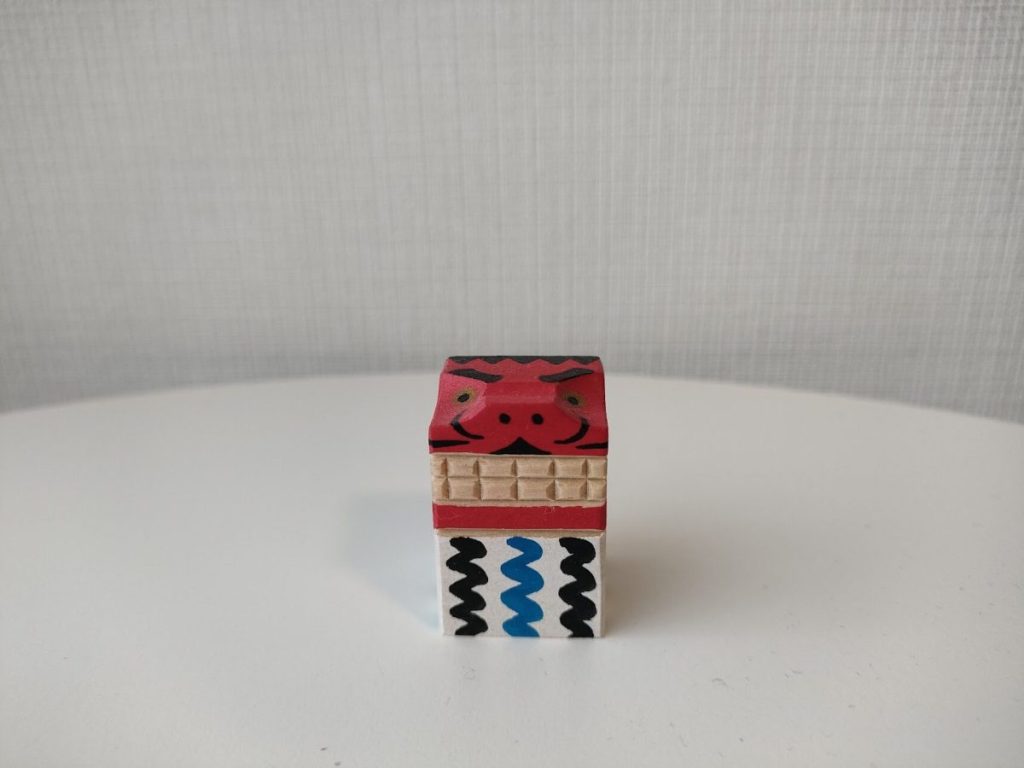
“Ueda Shishi” Folk craft Ueda City in Nagano Prefecture.
It is said to have originated from the lion dance performed during the construction of Ueda Castle, and is cherished as a good luck charm in the region. This craft, known as “Nomin Bijutsu” (Farmers’ Art), is created by local farmers and is loved as everyday household items and decorative pieces.
Even though they are small, you can see the detailed workmanship, and I fell in love with them at first sight and bought one. Takei Craft Shop has many other cute and heartwarming crafts. It’s a store I’d like to visit again when I’m nearby.
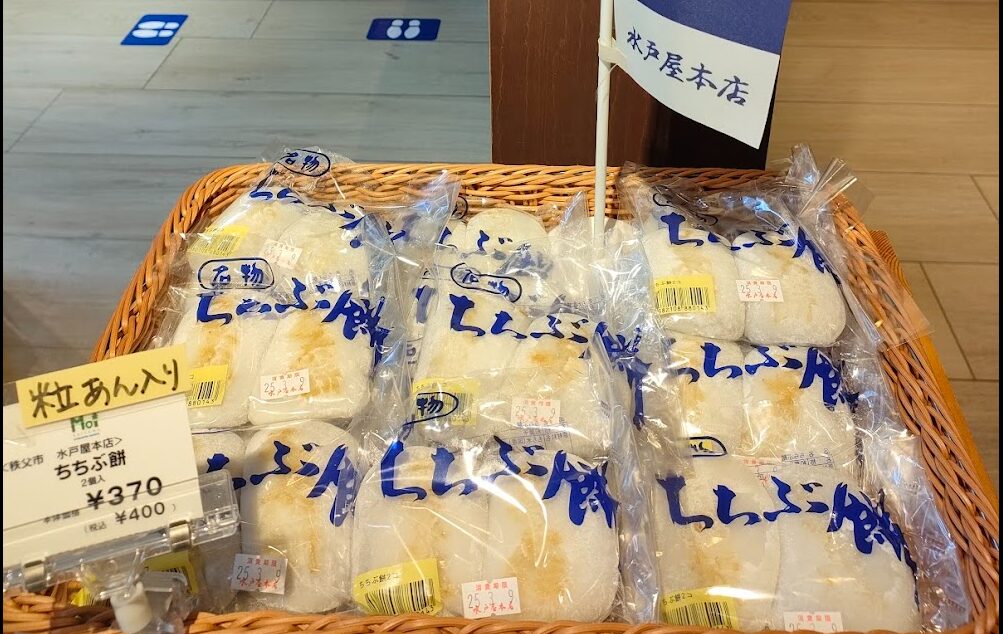
Chichibu Mochi(ちちぶ餅) is a traditional rice cake confectionery made in Chichibu City, Saitama Prefecture. This mochi is especially famous for being sold during the Chichibu Night Festival and is cherished as a local specialty. It can also be purchased at roadside stations and souvenir shops.
Chichibu Mochi is made using wheat flour and kudzu starch, and it features a sweet and very very soft texture. There are varieties that contain red bean paste, as well as simple mochi without any filling. While its shelf life is short and it is delicate, making it unsuitable for long-distance transport, it is definitely something to be enjoyed locally. Every time I visit east of Saitama prefecture (near Chichibu-city), I can’t help but buy it to savor that delightful taste!